
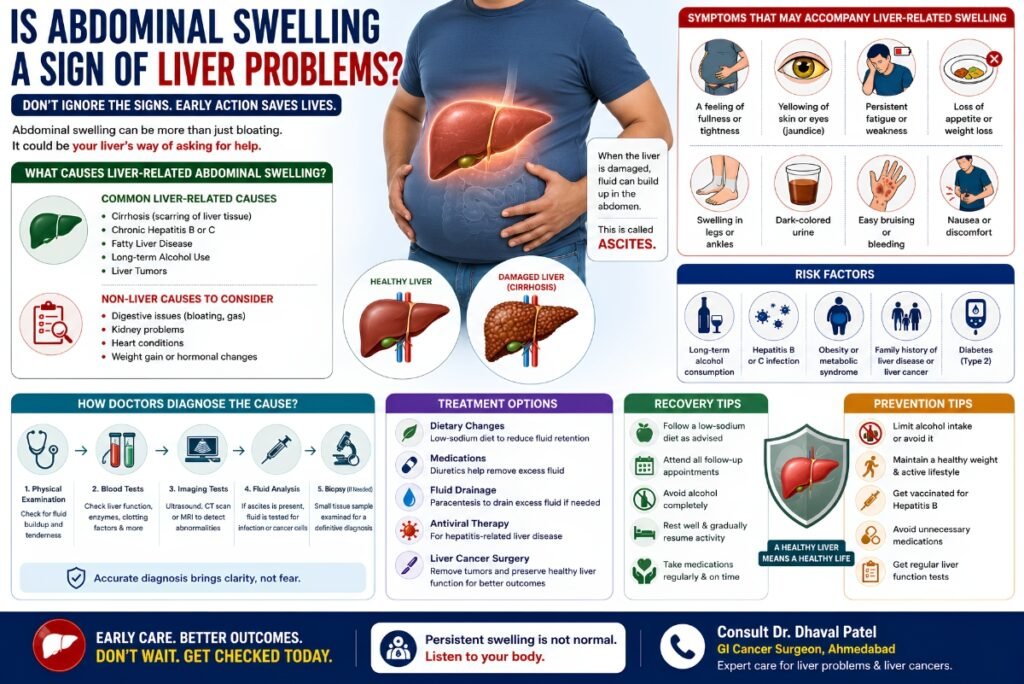
Is Abdominal Swelling a Sign of Liver Problems?
You notice your stomach looks more bloated than usual. Your clothes feel tighter around the waist, even though your weight hasn’t really changed. It’s easy to blame it on something you ate, but when the swelling doesn’t go away after a few days, it’s natural to start wondering if something deeper is going on.
Dr. Dhaval Patel, known for his expertise in liver cancer surgery in Ahmedabad, sees this scenario often. In his experience, abdominal swelling is one of the more visible clues that the liver may not be working the way it should. There’s no need to jump straight to worst-case thinking, but there’s also little value in ignoring it for weeks on end.
Let’s talk through what might be causing that swelling, what symptoms to watch for, and when it’s genuinely time to see a specialist.
What Causes Abdominal Swelling Related to the Liver?
The liver plays a huge role in filtering toxins, processing nutrients, and regulating fluid balance in the body. When it isn’t working properly, fluid can build up in the abdominal cavity. This condition is called ascites, and it’s one of the more common reasons liver issues show up as visible swelling.
Common Liver-Related Causes
- Cirrhosis, which is scarring of the liver tissue caused by long-term damage
- Chronic hepatitis B or C infection
- Fatty liver disease, often linked to obesity or poor diet
- Long-term alcohol use
- Liver tumors, which can interfere with normal liver function and blood flow
Non-Liver Causes Worth Ruling Out
Swelling doesn’t always point to the liver. Sometimes it’s related to:
- Digestive issues like bloating or gas
- Kidney problems affecting fluid balance
- Heart conditions that cause fluid retention
- Weight gain or hormonal changes
This is exactly why a proper medical evaluation matters. Guessing at home rarely gives you a clear answer.
Symptoms That Often Accompany Liver-Related Swelling
Abdominal swelling caused by liver problems rarely shows up completely on its own. Keep an eye out for these accompanying signs:
- A feeling of fullness or tightness in the belly
- Yellowing of the skin or eyes, known as jaundice
- Persistent fatigue or weakness
- Loss of appetite or unexplained weight loss
- Swelling in the legs or ankles
- Dark-colored urine
- Easy bruising or bleeding
If swelling shows up alongside two or more of these symptoms, it’s a strong signal to get checked rather than wait.
Risk Factors That Increase Your Chances
Certain factors make liver-related abdominal swelling more likely to occur:
- Long-term alcohol consumption
- Chronic viral hepatitis infection
- Obesity or metabolic syndrome
- Family history of liver disease or liver cancer
- Type 2 diabetes
- Exposure to certain toxins or long-term medication use affecting the liver
Having one or more of these risk factors doesn’t guarantee a problem, but it does mean regular liver check-ups are a smart idea.
How Doctors Diagnose the Underlying Cause
When a patient comes in with abdominal swelling, doctors typically start with a straightforward, step-by-step evaluation.
Initial Assessment
- A physical examination to check for fluid buildup and tenderness
- Blood tests to assess liver function, including enzyme levels and clotting factors
Further Diagnostic Tools
- Ultrasound imaging to detect fluid, cysts, or tumors in the liver
- CT scan or MRI for a more detailed view of liver structure
- Fluid sample analysis, if ascites is present, to check for infection or abnormal cells
- Liver biopsy, in certain cases, to examine tissue more closely
Dr. Dhaval Patel emphasizes that these tests are designed to give clarity, not fear. Most patients feel far more at ease once they understand exactly what’s happening inside their body.
Treatment Options Based on the Diagnosis
Treatment depends entirely on what’s causing the swelling in the first place.
- Dietary changes and sodium restriction are often the first step in managing mild ascites
- Diuretics, or medications that help remove excess fluid, are commonly prescribed
- Draining excess fluid, known as paracentesis, may be needed in more advanced cases
- Antiviral medications for patients with hepatitis-related liver damage
- Liver cancer surgery, when tumors are identified as the underlying cause, aimed at removing the affected tissue while preserving as much healthy liver function as possible
For patients diagnosed with liver tumors, timely surgical intervention often makes a significant difference in long-term outcomes.
Why Early Treatment Truly Matters
Catching liver cancer early, before symptoms progress, offers real advantages:
- Simpler, less invasive treatment options
- Better chances of preserving healthy liver function
- Reduced risk of complications like infection or internal bleeding
- Improved long-term survival, particularly in cases involving liver tumors
Waiting too long often narrows your treatment options. Acting early keeps more possibilities open.
Recovery Tips After Diagnosis or Treatment
- Follow a low-sodium diet as recommended by your doctor
- Attend all follow-up appointments to monitor liver function
- Avoid alcohol completely during recovery
- Rest adequately while gradually resuming light activity
- Take prescribed medications consistently, without skipping doses
- Lean on family support during the recovery process. Healing is easier when you don’t go through it alone
Prevention Tips for Long-Term Liver Health
- Limit alcohol intake or avoid it altogether
- Maintain a healthy weight through balanced nutrition and regular movement
- Get vaccinated against hepatitis B, if you haven’t already
- Avoid unnecessary or unsupervised use of medications that strain the liver
- Schedule routine liver function tests, especially if you have known risk factors
Final Thoughts
Abdominal swelling can feel confusing and, understandably, a little frightening. In many cases, the cause turns out to be manageable with the right diagnosis and care. But when it’s connected to liver disease or liver tumors, timely evaluation truly changes the outcome.
Your body communicates through symptoms like these for a reason. Listening early, and reaching out to a trusted specialist when something feels off, is one of the most valuable steps you can take for your health. If you’ve been noticing persistent abdominal swelling, consider scheduling a consultation to understand what’s really going on and explore the right path forward.

