Could Loss of Appetite Be a Sign of Gallbladder Cancer?
We’ve all had days when we just don’t feel like eating. Maybe you’re stressed, coming down with a cold, or simply not hungry after a big lunch. Most of the time, it’s nothing to worry about. But if your appetite has been low for weeks, and you can’t quite figure out why, it’s natural to wonder what’s going on inside your body.
One question that sometimes comes up is whether a lasting loss of appetite could point to something more serious, like gallbladder cancer. Let’s break this down in plain terms.
What Does the Gallbladder Actually Do?
The gallbladder is a small, pear-shaped organ tucked under your liver. Its job is to store bile, a fluid that helps your body break down fat from the food you eat. When you eat something fatty, the gallbladder squeezes out bile to help with digestion.
Gallbladder cancer is fairly rare compared to other cancers, but it’s worth understanding because it often doesn’t cause obvious symptoms in its early stages. That’s part of what makes it tricky to catch early.
Can Loss of Appetite Really Be a Warning Sign?
Yes, it can be one of several signs, but it’s rarely the only one. When gallbladder cancer grows, it can affect nearby organs and disrupt normal digestion. This can make you feel full quickly, queasy after eating, or simply uninterested in food.
That said, loss of appetite is one of the most common symptoms across dozens of conditions, from a stomach bug to anxiety to a new medication. On its own, it’s not a red flag. It becomes more worth noticing when it shows up alongside other changes in your body.
Other Symptoms Worth Paying Attention To
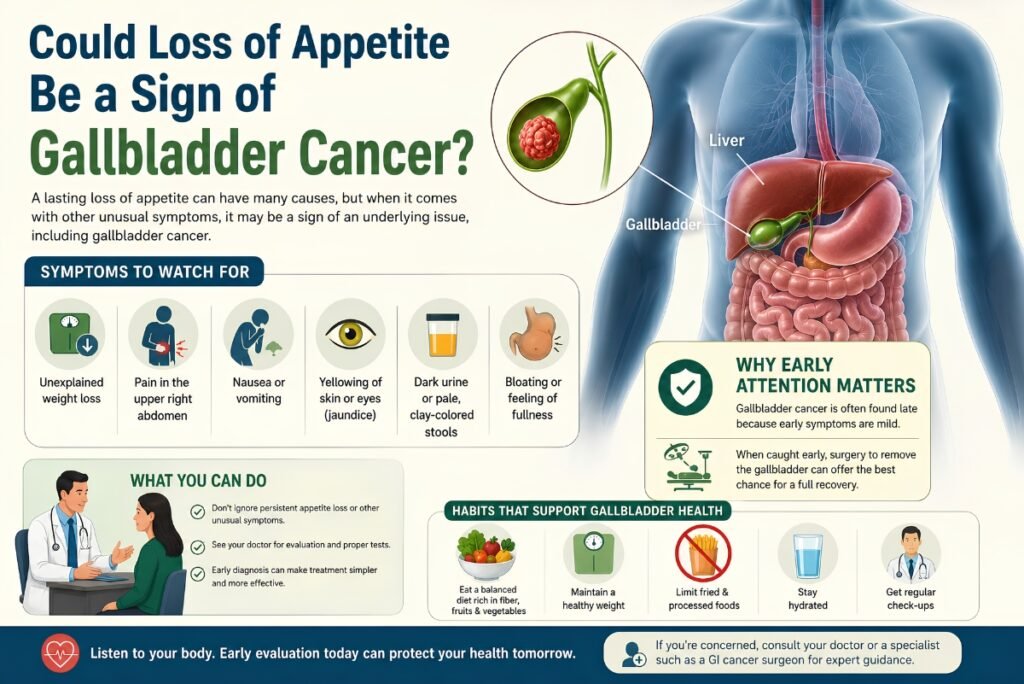
If gallbladder cancer is behind a loss of appetite, it usually doesn’t travel alone. Some other signs that sometimes appear together include:
- Unexplained weight loss – dropping pounds without trying
- Pain in the upper right side of your belly – often a dull, nagging ache
- Nausea or vomiting – especially after meals
- Yellowing of the skin or eyes (jaundice)-this happens when bile can’t flow properly
- Dark urine or pale, clay-colored stools – another sign related to bile flow
- Bloating – a feeling of fullness or swelling in the abdomen
If you notice several of these together, especially if they’ve lasted more than a couple of weeks, it’s a good idea to get checked out for gallbladder cancer surgery. Not because it’s necessarily cancer, but because your doctor can figure out what’s actually causing it.
Why Early Attention Matters
Here’s the honest truth: gallbladder cancer is often found later rather than earlier, simply because early symptoms are so mild and easy to brush off. That’s exactly why paying attention to persistent changes in your body, even small ones, can make a real difference.
If a diagnosis is made early, treatment options are usually more effective and less invasive. In cases where the cancer is caught before it spreads, doctors may be able to remove it through a type of gastrointestinal cancer surgery, where the gallbladder and sometimes nearby tissue are removed. When cancer is confined to the gallbladder, this kind of surgery can offer a real chance at a full recovery.
For cases found at a later stage, treatment often becomes more complex and may involve a mix of surgery, chemotherapy, and other therapies, tailored to each person’s situation. This is why doctors often stress that timing matters so much when it comes to digestive system cancers.
What Should You Do If You're Concerned?
If your appetite has been off for a while and something feels different in your body, don’t just wait it out hoping it’ll pass. A simple visit to your doctor can go a long way. They might run some basic blood tests, an ultrasound, or other imaging to see what’s happening with your gallbladder and surrounding organs.
Most of the time, appetite changes turn out to be linked to something far more common and treatable, like acid reflux, a gallstone, or even stress. But getting it checked gives you peace of mind either way.
A Few Everyday Habits That Support Gallbladder Health
While there’s no guaranteed way to prevent gallbladder cancer, some habits support overall digestive health:
- Eating a balanced diet with plenty of fiber, fruits, and vegetables
- Staying at a healthy weight for your body
- Limiting fried and heavily processed foods
- Staying hydrated
- Getting regular check-ups, especially if gallstones run in your family
The Bottom Line
Loss of appetite by itself usually isn’t a sign of anything serious. But when it sticks around and comes with other unusual symptoms, it’s worth having a conversation with your doctor. Catching digestive issues early, including rarer ones like gallbladder cancer, often makes treatment simpler and more successful.
If your doctor suspects something is off with your gallbladder or digestive organs, they may refer you to a specialist, such as a GI cancer surgeon, who can run further tests and guide you through the right next steps. Experienced specialists like Dr. Dhaval Patel often stress that early evaluation, rather than waiting things out, is what makes the biggest difference in outcomes.

