Does Laparoscopic Surgery Leave Scars?
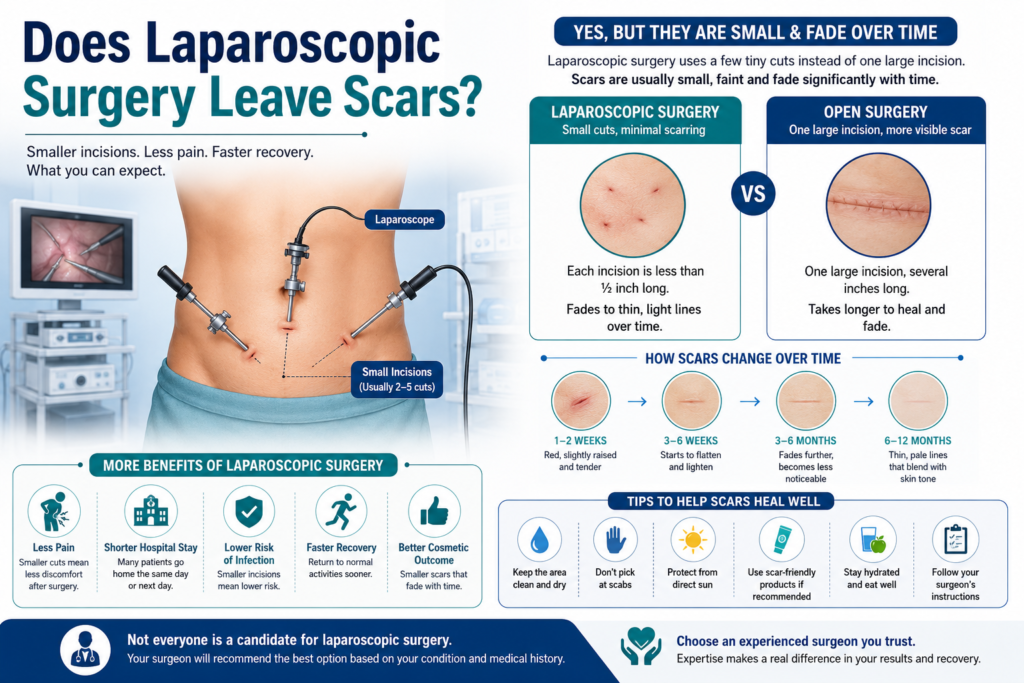
Yes, it does leave scars, but they’re typically small and much less noticeable than scars from open surgery. Instead of one long cut, laparoscopic surgery usually involves a few incisions, each often less than half an inch long. Over time, these tend to fade into thin, light marks that are easy to overlook.
Compare that to open surgery, where a single incision might stretch several inches and take much longer to heal and fade. The difference in appearance, especially months down the line, is usually significant.
What Is Laparoscopic Surgery, Exactly?
Laparoscopic surgery, sometimes called keyhole surgery, is a technique where surgeons operate through a few small cuts instead of one large incision. A thin tube with a tiny camera, called a laparoscope, is inserted through one of these cuts, giving the surgeon a clear, magnified view of the area on a screen. The other small cuts allow specialized instruments to be inserted to perform the actual procedure.
This is very different from traditional open surgery, which usually requires a much longer incision to give the surgeon direct access and visibility.
How Many Scars Should You Expect?
This depends on the specific procedure, but most laparoscopic surgeries involve somewhere between two and five small incisions. Each one is used either for the camera or for the surgical instruments. Your surgeon will typically explain beforehand how many cuts your particular procedure will require and roughly where they’ll be placed.
How Do These Scars Change Over Time?
Right after surgery, the incision sites might look a little red, slightly raised, or tender to the touch. That’s a completely normal part of healing. Over the following weeks, they usually start to flatten and lighten in color.
By around six months to a year, most laparoscopic scars fade to thin, pale lines that blend in with your natural skin tone. Genetics, skin type, and how well you care for the area during healing all play a role in how quickly and smoothly this happens.
What Can You Do to Help Scars Heal Well?
While you can’t completely control how your body scars, a few simple habits can support smoother healing:
- Keep the area clean and dry, especially in the first week or two
- Avoid picking at scabs, even if it’s tempting
- Protect the area from direct sun exposure, since UV rays can darken scars
- Use scar-friendly products, like silicone gels or creams, if your surgeon recommends them
- Stay hydrated and eat well, since good nutrition supports skin healing
- Follow your surgeon’s aftercare instructions closely, since they know exactly what your incisions need
Are There Other Benefits Besides Smaller Scars?
Smaller scars are just one advantage of laparoscopic surgery. Because the incisions are so much smaller than open surgery, patients often experience:
- Less pain during recovery
- Shorter hospital stays
- Lower risk of infection
- Quicker return to normal activities
For many patients, these benefits matter just as much as, if not more than, the cosmetic outcome.
Is Laparoscopic Surgery Right for Everyone?
Not every condition or every patient is suited for a laparoscopic approach. Some situations, like certain complex cases or specific anatomical challenges, may still require open surgery. Your surgeon will assess your individual case, including your medical history and the nature of the condition, before recommending the best surgical option for you.
Choosing the Right surgeon
If you’re considering laparoscopic surgery, it’s worth choosing a surgeon with strong, hands-on experience in minimally invasive techniques. Skill and precision play a big role not just in the outcome of the surgery itself but also in how smoothly your recovery goes and how well your scars heal.
If you’re weighing your options for laparoscopic surgery in Ahmedabad, it helps to consult a surgeon with deep, hands-on experience in minimally invasive techniques. Dr. Dhaval Patel is one such specialist, recognized for combining surgical precision with clear, supportive patient care. The right expertise can make your surgery and recovery feel far less daunting.

