Can Exercise Help During Rectum Cancer Recovery?
Recovering from rectum cancer treatment is a journey that takes time, patience, and a lot of self-compassion. Along the way, many patients wonder whether it’s okay to be active again and if moving your body could actually help rather than hurt your recovery. It’s a fair question, and the answer might surprise you in a good way.
Let’s talk through how exercise fits into recovery, what’s safe, and how to ease back into movement at your own pace.
Is It Safe to Exercise After Rectum Cancer Treatment?
For most people, yes, gentle exercise is not only safe but genuinely helpful during recovery. That said, the right amount and type of activity depends on your specific treatment, whether you’ve had surgery, chemotherapy, radiation, or a combination, and how your body is responding.
The key is to always check with your doctor or care team before starting or increasing any physical activity. They know your specific situation and can guide you on what’s appropriate at each stage of recovery.
Can Exercise Help During Rectum Cancer Recovery?
Yes, research and patient experience both point to real benefits. Movement, even in small amounts, can support your body and mind in several ways during this healing period.
What Are the Benefits of Staying Active During Recovery?
Here’s how gentle movement can make a difference:
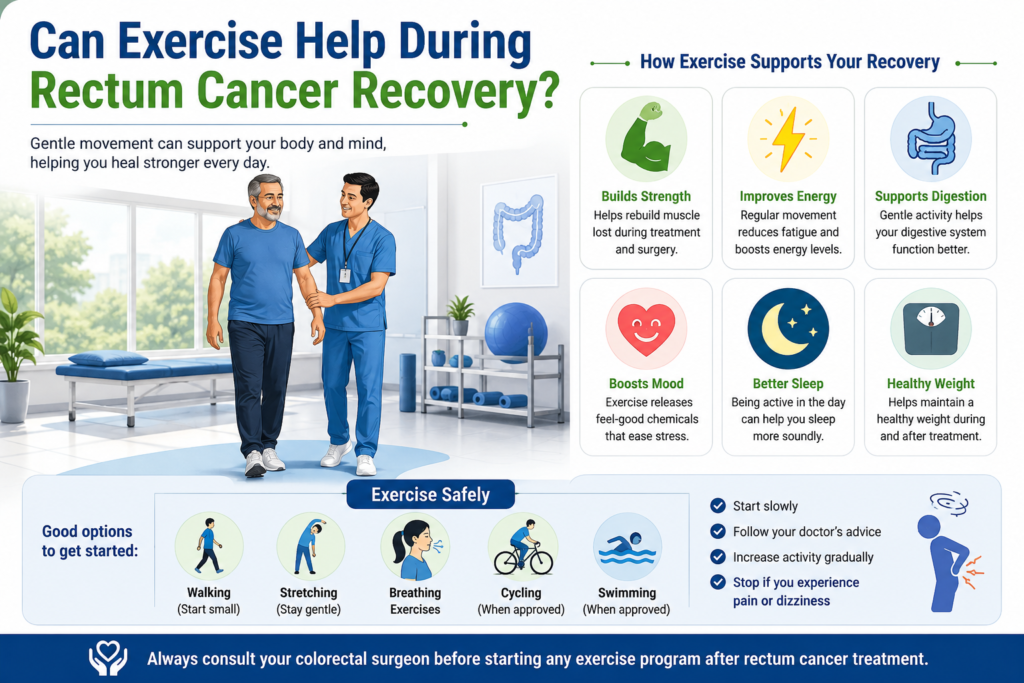
- Builds strength back up – Treatment and surgery can leave muscles weaker than usual. Light activity helps rebuild strength gradually.
- Improves energy levels – It might seem backwards, but moving a little often reduces the fatigue that comes with treatment, rather than adding to it.
- Supports digestion – Since rectum cancer treatment affects the digestive system, gentle movement can help things function more smoothly.
- Boosts mood – Physical activity naturally encourages the release of feel-good chemicals in the brain, which can ease some of the emotional weight of recovery.
- Helps with sleep – Many patients find they sleep more soundly after being lightly active during the day.
- Supports healthy weight management – Staying active can help maintain a steady, healthy weight during and after treatment.
What Kind of Exercise Is Safe After Surgery?
In the early days after surgery, your focus should be on gentle, low-impact movement, not intense workouts. Some good options include:
- Short walks, starting with just a few minutes and slowly increasing over time
- Light stretching, to ease stiffness without straining healing tissue
- Breathing exercises, which support lung function, especially important after surgery
- Gentle household movement, like light tidying or standing up regularly instead of staying still for long periods
As healing progresses and your doctor gives the go-ahead, you can slowly introduce more structured activity, such as swimming, cycling, or light strength training.
When Should You Wait Before Exercising?
There are times when it’s best to hold off or scale back on activity, such as the following:
- Right after surgery, while incisions are still healing
- If you’re experiencing significant fatigue or weakness
- During certain phases of chemotherapy or radiation, when your body needs extra rest
- If you notice pain, dizziness, or unusual symptoms during movement
Listening to your body is just as important as staying active. Some days will feel better than others, and that’s completely normal.
How Can You Ease Back Into Exercise Safely?
Here are a few simple guidelines to help you build activity back into your routine:
- Start small. Even five to ten minutes of walking counts as meaningful movement.
- Increase gradually. Add a little more time or intensity only when your body feels ready.
- Stay consistent, not intense. Regular light activity is more beneficial than occasional strenuous exercise.
- Track how you feel. Keeping a simple note of energy levels and any discomfort can help you and your doctor adjust your activity plan.
- Celebrate small wins. Recovery isn’t a race, and every bit of movement is progress.
Does Exercise Replace Medical Treatment?
No, exercise is a helpful support to your recovery, not a replacement for medical care. It works best alongside the treatment plan your doctors have outlined for you. Think of it as one more tool that helps your body heal and your mind stay a little lighter during a difficult time.
Getting Support From the Right Care Team
Recovering from rectum cancer, especially after surgery, is easier with a care team that understands both the medical and emotional sides of healing. If you’re looking into rectum cancer surgery in Ahmedabad, it’s worth choosing a surgical team experienced in colorectal procedures who can guide you through every phase, from treatment to recovery.
Patients considering rectum cancer surgery in Ahmedabad often turn to experienced specialists like Dr. Dhaval Patel, known for his precise surgical approach and genuine focus on patient well-being throughout recovery. You can learn more about his practice at drdhavalpatelgastrosurgeon.com. Having the right support behind you can make the recovery journey feel a lot more manageable.

