
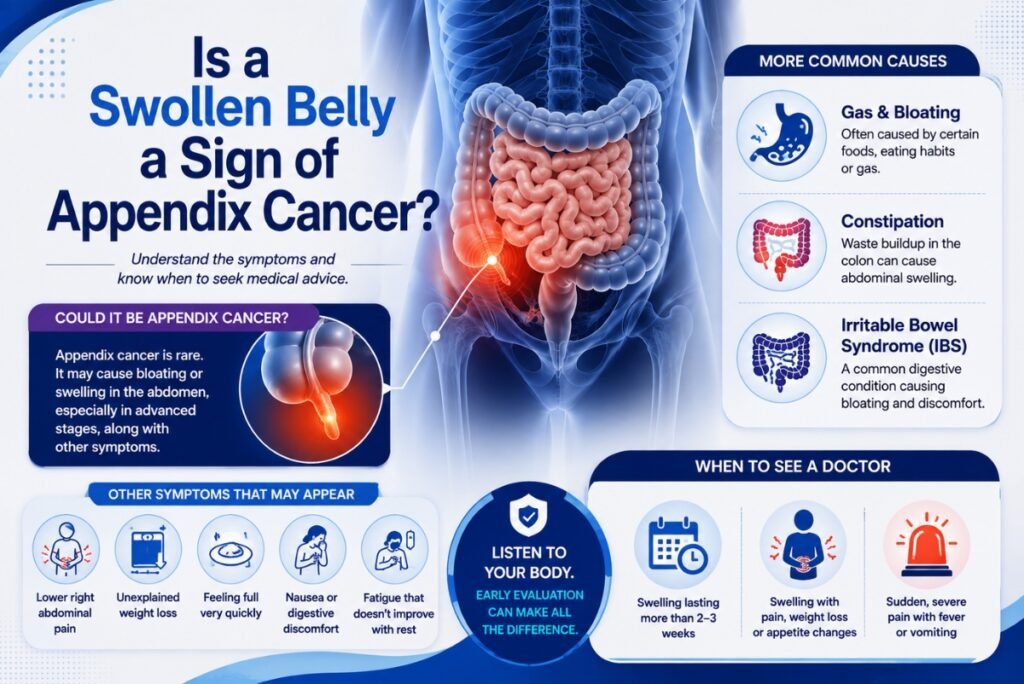
Is a Swollen Belly a Sign of Appendix Cancer?
A swollen or bloated belly is something almost everyone deals with from time to time, usually after a big meal, too much salt, or a bit of gas. Most of the time, it passes on its own. But if it’s been sticking around, or you’ve heard the term “appendix cancer” somewhere and started wondering, it’s worth understanding what’s actually going on and when this symptom deserves closer attention.
Let’s break this down calmly and clearly.
What Is Appendix Cancer, Exactly?
Appendix cancer is a rare type of cancer that develops in the appendix, the small, finger-shaped pouch attached to your large intestine. Because the appendix is small and its exact function isn’t fully understood, cancer here is uncommon and often discovered unexpectedly, sometimes during surgery for appendicitis or unrelated abdominal issues.
Is a Swollen Belly a Sign of Appendix Cancer?
It can be, but it’s rarely the first or only sign, and swollen bellies are far more often linked to much more common causes. Appendix cancer can sometimes cause fluid buildup or abdominal swelling as it grows, particularly in more advanced cases, but this is just one of several possible explanations for a swollen abdomen.
In other words, a swollen belly on its own is not a reliable indicator of appendix cancer. It becomes more relevant when it shows up alongside other specific, lingering symptoms.
What Other Symptoms Might Appear With Appendix Cancer?
If appendix cancer is behind abdominal swelling, it typically comes with other changes too, such as:
- Ongoing abdominal pain, often on the lower right side
- Unexplained weight loss
- Changes in bowel habits that last more than a few weeks
- A feeling of fullness, even after small meals
- Nausea or digestive discomfort
- Fatigue that doesn’t improve with rest
If several of these symptoms are present together and persist for weeks, it’s worth having them evaluated, rather than assuming they’ll pass on their own.
What Are More Common Causes of a Swollen Belly?
Before jumping to conclusions, it helps to know how common everyday causes are compared to appendix cancer. These include:
- Gas and bloating from certain foods or eating habits
- Constipation, which can cause noticeable abdominal swelling
- Irritable bowel syndrome, a common digestive condition
- Fluid retention, often linked to diet, hormones, or other health conditions
- Ovarian or gynecological conditions in women, which can also cause abdominal swelling
These causes are far more common than appendix cancer, which remains a rare diagnosis overall.
How Is Appendix Cancer Usually Discovered?
Interestingly, appendix cancer is often found by chance, sometimes during surgery for appendicitis (an inflamed appendix) or during imaging done for an unrelated reason. This is part of why it can be tricky to catch early through routine symptom-watching alone.
That said, persistent, unexplained symptoms are always worth mentioning to your doctor, since early evaluation is the best tool available for catching any underlying issue, common or rare.
When Should You See a Doctor About a Swollen Belly?
It’s a good idea to schedule a visit if you notice:
- Swelling that lasts more than two to three weeks
- Swelling paired with ongoing pain, weight loss, or appetite changes
- A visibly enlarged abdomen without a clear, everyday explanation
- Any combination of the symptoms listed earlier in this article
Sudden, severe abdominal pain, especially with fever or vomiting, needs prompt medical attention, since this can sometimes point to appendicitis or another urgent issue.
How Is the Cause of Abdominal Swelling Diagnosed?
Your doctor may recommend a combination of tests to understand what’s happening, including:
- A physical examination, to check for tenderness or unusual masses
- Imaging scans, like ultrasound or CT, to get a clearer picture of the abdomen
- Blood tests, to check for markers or signs of inflammation
- Further evaluation, if imaging reveals something unusual, which may include specialist referral
These tests help pinpoint the exact cause, whether it’s something simple and treatable or something that needs more focused care.
Quick Reference: Swollen Belly Symptoms
- Comes and goes, tied to eating or gas → Likely everyday bloating
- Persistent, with constipation → Likely a digestive issue like IBS
- Ongoing, with pain and weight loss → Needs medical evaluation
- Sudden, severe, with fever → Seek urgent care
What Should You Do If You're Concerned?
If your swelling has lasted more than a few weeks or comes with other symptoms, don’t wait it out. A simple doctor’s visit can bring clarity, whether that means ruling out anything serious or catching something early enough for straightforward treatment.
Getting the Right Expert Evaluation
While appendix cancer is rare, having an experienced specialist evaluate persistent or unusual abdominal symptoms brings real peace of mind either way. For those exploring appendix cancer surgery in Ahmedabad or simply seeking a thorough evaluation of ongoing digestive symptoms, it helps to consult a surgeon with specific experience in gastrointestinal cancers.

