
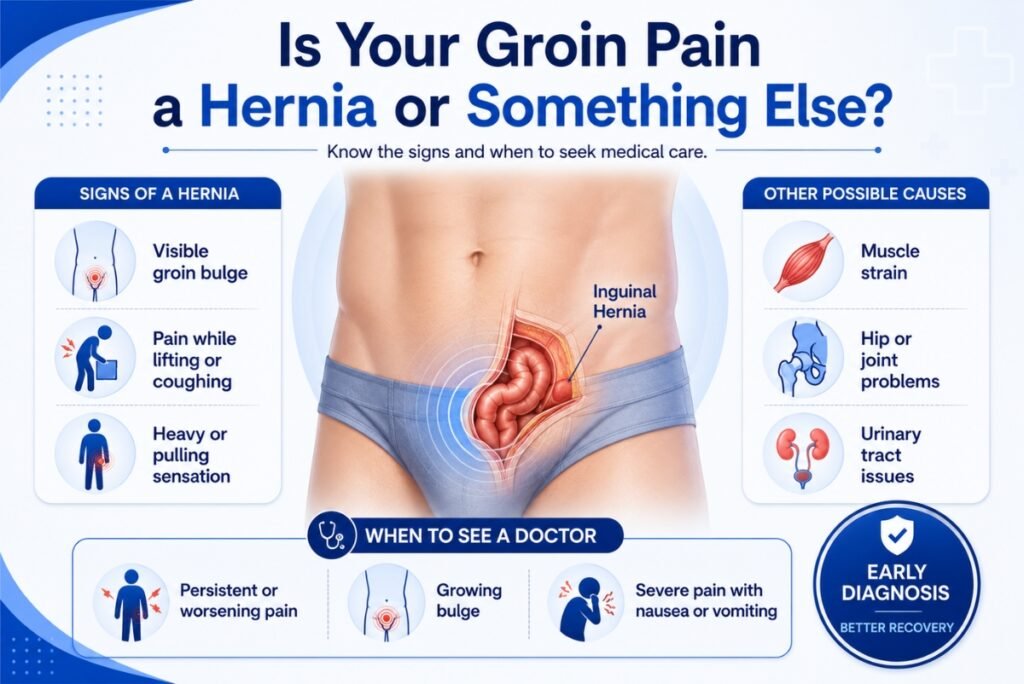
Is Your Groin Pain a Hernia or Something Else?
Groin pain has a funny way of making you pause mid-step and wonder what’s going on. Maybe it came on suddenly after lifting something heavy, or maybe it’s been a dull ache that’s been sticking around for a while. One of the first things that comes to mind for a lot of people is a hernia, but groin pain can actually come from several different causes.
Let’s walk through how to tell the difference and when it’s time to see a doctor.
What Exactly Is a Hernia?
A hernia happens when an internal part of your body, often part of your intestine, pushes through a weak spot in the surrounding muscle or tissue wall. In the groin area, this usually happens in the lower abdominal wall, creating a bulge that can be uncomfortable or even visible under the skin.
Hernias are more common than people realize and can affect anyone, though certain activities and body types make them more likely.
Is Your Groin Pain a Hernia or Something Else?
Groin pain can stem from several different sources, and hernias are just one possibility. The trick is looking at the specific pattern of your symptoms, since different causes tend to show up in slightly different ways.
What Are the Signs of a Hernia?
If your groin pain is due to a hernia, you might notice:
- A visible bulge in the groin area, which may become more noticeable when standing, coughing, or straining
- A bulge that disappears when lying down, since gravity isn’t pulling on it anymore
- A dull, aching, or heavy sensation, rather than sharp pain
- Discomfort that worsens with activity, like lifting, bending, or prolonged standing
- A pulling sensation, especially during physical exertion
Hernias often start subtly and gradually become more noticeable over time, though in some cases, they can appear suddenly.
What Else Could Be Causing Groin Pain?
Hernias aren’t the only reason for groin discomfort. Several other conditions can cause similar symptoms:
Muscle Strain – Overstretching or straining the muscles in your groin or inner thigh, often from exercise or sudden movement, is a very common cause of groin pain. This type of pain tends to feel sharp initially and improves with rest.
Joint or Hip Issues – Problems with the hip joint, like arthritis or inflammation, can sometimes radiate pain into the groin area, mimicking hernia symptoms.
Urinary Tract Issues – Conditions like kidney stones or urinary tract infections can cause referred pain that’s felt in the groin, even though the source is elsewhere in the body.
Lymph Node Swelling – Swollen lymph nodes in the groin, often due to infection or inflammation nearby, can cause tenderness and discomfort in the same general area as a hernia.
Nerve Compression – Sometimes, a pinched or irritated nerve in the lower back or pelvis can cause pain that radiates down into the groin.
How Can You Tell the Difference at Home?
While only a doctor can give you a definitive answer, a few patterns can offer some helpful clues:
- A visible or feel-able bulge points more toward a hernia
- Pain that’s sharp and tied to a specific movement or injury often suggests a muscle strain
- Pain accompanied by urinary symptoms may point toward a urinary tract issue
- Pain that radiates from your lower back or hip could involve a nerve or joint issue
That said, these are general patterns, not guarantees, so it’s always best to get a proper evaluation if the pain persists.
When Should You See a Doctor?
Book an appointment if you notice:
- A bulge that isn’t going away or seems to be growing
- Pain that’s worsening instead of improving
- Redness or discoloration over a bulge
- Discomfort that’s interfering with daily activities
Seek urgent care if you experience sudden, severe pain along with nausea or vomiting, or if a bulge becomes firm and won’t push back in, since this can sometimes signal a complication that needs prompt attention.
How Are Hernias Diagnosed and Treated?
Diagnosis is usually simple, your doctor will examine the area, sometimes asking you to cough or strain to make the bulge more noticeable, and may use an ultrasound if further confirmation is needed.
Treatment depends on the size and symptoms of the hernia. Small, symptom-free hernias may just be monitored, while larger or more bothersome ones are often repaired surgically. Many hernia repairs today use minimally invasive, laparoscopic techniques, which usually mean smaller incisions, less pain, and a quicker return to daily life compared to traditional open surgery.
Quick Takeaways
- Not all groin pain is a hernia, muscle strains, joint issues, and other conditions can cause similar discomfort
- A visible bulge that flattens when lying down is a strong hint of a hernia
- Sudden, severe pain with a firm bulge needs urgent medical attention
- Most hernias are diagnosed easily through a physical exam
- Modern hernia repair options are often minimally invasive with faster recovery times
Finding the Right Care for Your Groin Pain
If you’re dealing with ongoing groin discomfort, getting a clear diagnosis is the best first step toward relief. For those considering hernia surgery in Ahmedabad, choosing a surgeon experienced in modern, minimally invasive repair techniques can make a real difference in comfort and recovery.

