
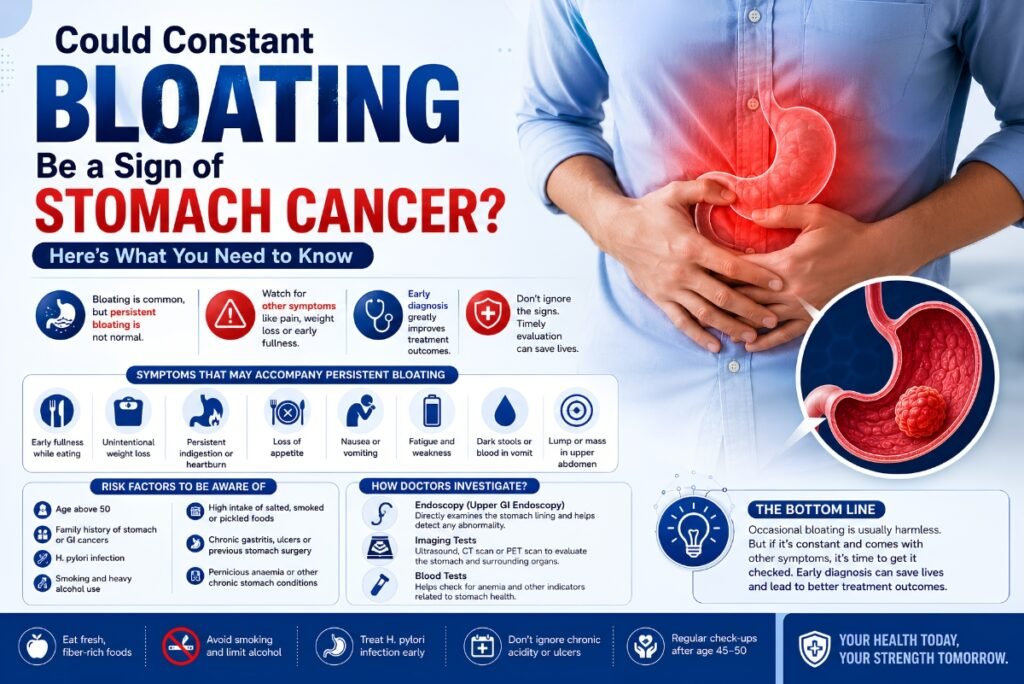
Could Constant Bloating Be a Sign of Stomach Cancer?
Almost everyone feels bloated once in a while. A heavy meal, too much chai and a stressful week, and suddenly your stomach feels tight and uncomfortable. Most of the time, it passes on its own.
But what if the bloating never really goes away? What if it has been weeks, maybe months, and you have started wondering whether something more serious is going on?
This is a question many patients quietly carry with them before they ever say it out loud to a doctor. And it is a fair question to ask. While bloating is usually harmless, persistent bloating that does not improve can sometimes point to underlying stomach conditions, including, in rare cases, stomach cancer. Understanding when bloating is ordinary and when it needs a specialist’s attention can make a real difference, especially for patients exploring options for stomach cancer surgery in Ahmedabad.
Let’s walk through this together, calmly and clearly.
Why Bloating Happens in the First Place
Before jumping to worst-case scenarios, it helps to understand that bloating has many everyday causes. Your stomach and intestines are sensitive to:
- Eating too quickly or overeating
- Gas-forming foods like beans, cabbage, or carbonated drinks
- Lactose or gluten intolerance
- Acidity and indigestion
- Stress and irregular eating habits
- Constipation
In the vast majority of cases, bloating is linked to one of these everyday triggers. A single episode, or occasional bloating after specific meals, is rarely a cause for alarm.
The concern grows when bloating becomes a constant companion, something that lingers day after day, week after week, without any clear dietary trigger.
When Bloating Starts Looking Different
There is a meaningful difference between “I feel bloated after biryani” and “I feel bloated almost every single day, regardless of what I eat. “The second pattern deserves attention.
Persistent, Unexplained Bloating – If your abdomen feels swollen or tight most days, without a clear connection to specific foods, this is the kind of bloating that should not be brushed aside. Especially when it lasts more than two to three weeks.
Bloating Accompanied by Other Symptoms – Bloating on its own is rarely the only red flag. What doctors look at more closely is bloating combined with other changes in the body. This combination matters far more than bloating alone
Symptoms That Often Accompany Concerning Bloating
Here are signs that, when they appear alongside ongoing bloating, warrant a proper medical evaluation:
- Early fullness while eating , feeling full after just a few bites, even though you have barely eaten anything
- Unintentional weight loss , losing weight without changing your diet or activity level
- Persistent indigestion or heartburn , especially if it is new and does not respond to usual antacids
- Loss of appetite,food simply stops feeling appealing, even favourite dishes
- Nausea or occasional vomiting , without an obvious cause like food poisoning
- Fatigue that does not improve with rest
- Dark stools or visible blood in vomit , a sign that should never be ignored, ever
- A feeling of a lump or mass in the upper abdomen
None of these symptoms alone confirms cancer. But together, especially when bloating refuses to settle, they form a pattern worth investigating properly.
Risk Factors That Make Bloating Worth a Closer Look
Some patients are at higher risk of stomach-related conditions and should be more attentive to persistent symptoms:
- Age above 50: stomach cancer risk increases with age
- Family history: a parent or sibling with stomach or other GI cancers
- pylori infection : a common stomach bacterial infection linked to chronic gastritis and ulcers
- Smoking and heavy alcohol use
- High intake of salted, smoked, or pickled foods : a dietary pattern fairly common across parts of India
- Previous stomach surgery or chronic gastric ulcers
- Pernicious anaemia or other chronic stomach conditions
If you fall into one or more of these categories and have been dealing with ongoing bloating, it is worth being a little more proactive rather than waiting it out.
Treatment Options When Stomach Cancer Is Confirmed
If a diagnosis of stomach cancer is confirmed, it is natural to feel overwhelmed. But treatment today has advanced considerably, and outcomes depend heavily on how early the cancer is caught.
Surgery – Surgery remains the primary treatment for stomach cancer when it is detected at an operable stage. Depending on the location and extent of the tumor, this may involve the following:
- Partial gastrectomy , removal of the affected portion of the stomach
- Total gastrectomy , removal of the entire stomach, with the oesophagus connected directly to the small intestine
- Lymph node dissection , removal of nearby lymph nodes to check for and prevent spread
Many of these procedures can now be performed using laparoscopic or robotic techniques, which involve smaller incisions, less blood loss, and a noticeably faster recovery compared to traditional open surgery.
Chemotherapy and Targeted Therapy – Chemotherapy is often combined with surgery, sometimes before the operation to shrink the tumor and sometimes after to reduce the chance of recurrence. In specific cases, targeted therapies and immunotherapy may also be considered.
Why Early Treatment Makes Such a Big Difference
This point cannot be stressed enough. Stomach cancer detected at an early stage has a significantly better outlook than cancer found after it has spread.
- Early-stage cancer: Often treatable with surgery alone, with good long-term survival.
- Locally advanced cancer: Treated with a combination of surgery and chemotherapy, with reasonably good outcomes in many patients.
- Advanced or metastatic cancer: Treatment focuses on controlling the disease and maintaining quality of life.
The earlier the diagnosis, the more treatment options remain on the table, and the gentler those options tend to be on the body.
Recovery Tips After Stomach Cancer Surgery
If surgery becomes necessary, recovery is gradual but very manageable with the right guidance.
- Eat small, frequent meals. After stomach surgery, your digestive system needs time to adjust to smaller portions.
- Prioritise protein-rich, soft foods. This supports healing and helps maintain strength.
- Stay upright after meals. This simple habit reduces discomfort and helps digestion.
- Walk daily, starting gently. Movement supports circulation and reduces the risk of complications.
- Attend every follow-up appointment. Regular monitoring helps catch any concerns early.
- Be patient with your appetite. It is normal for appetite to take weeks or months to stabilise after stomach surgery.
Recovery is rarely a straight line, and that is completely normal. Be kind to yourself through this process.
Prevention Tips Worth Adopting Today
You cannot control every risk factor, but several habits genuinely reduce your risk of stomach-related conditions:
- Reduce intake of salted, smoked, and processed foods
- Get tested and treated for H. pylori infection if you have chronic gastritis or ulcers
- Avoid smoking and limit alcohol consumption
- Eat plenty of fresh fruits and vegetables
- Do not ignore chronic acidity or ulcers,get them properly evaluated
- Schedule regular health check-ups, especially after age 45–50
Summary
Bloating is, in most cases, nothing more than your digestive system reacting to everyday life. But when it lingers without explanation or shows up alongside other quiet warning signs, it deserves a proper look rather than guesswork or worry in silence.
Trust your body when it tells you something feels different. A timely consultation can bring either genuine peace of mind or the early diagnosis that makes all the difference in treatment outcomes.
For patients in Ahmedabad seeking expert guidance on persistent digestive symptoms or stomach cancer surgery in Ahmedabad, Dr. Dhaval Patel, a specialist in GI and HPB cancer surgery, offers thorough evaluation, evidence-based treatment, and compassionate care at every step.

