
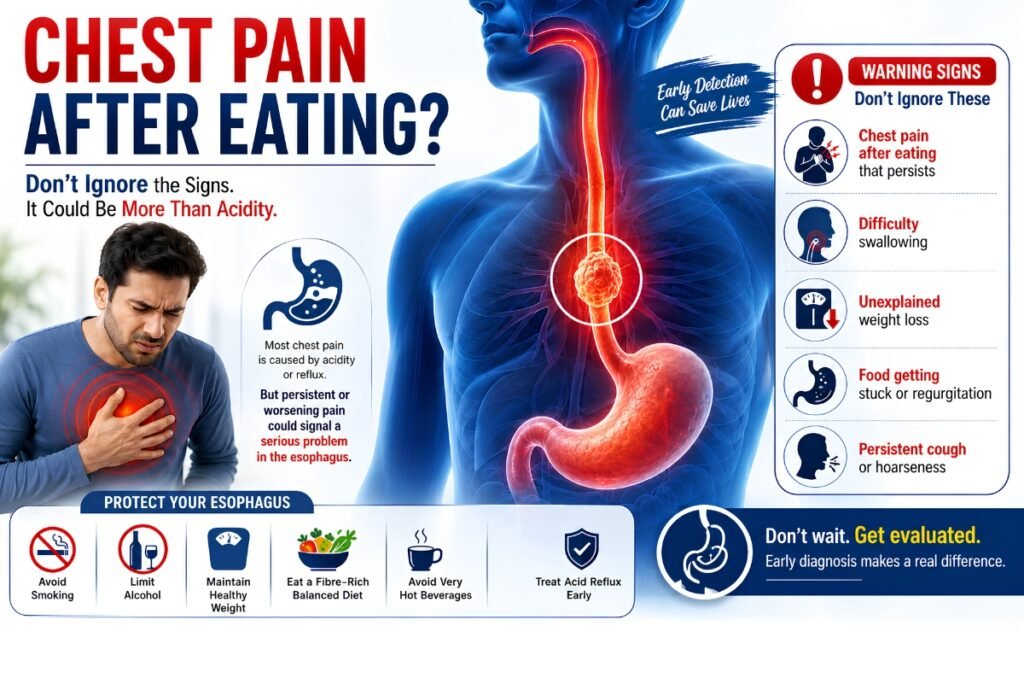
Is Chest Pain After Eating a Warning Sign of Esophageal Cancer?
You finish a meal, and a little while later, a tight, burning sensation builds up behind your breastbone. Most people assume it is acidity. Pop an antacid, lie down for a bit, and move on with the day.
But what happens when this becomes a pattern? When chest discomfort after eating shows up again and again, week after week, and the usual remedies stop working the way they used to?
This is the point where many patients start to worry, often quietly, about something more serious. It is a reasonable concern. While most chest pain after meals comes from common digestive issues, persistent or worsening symptoms can sometimes point toward problems with the food pipe, including, in some cases, esophageal cancer. Understanding the difference matters, especially for anyone exploring esophageal cancer surgery in Ahmedabad or simply trying to make sense of symptoms that have lasted too long.
Let’s go through this carefully, one piece at a time.
Understanding the Esophagus and Why Chest Pain Happens There
The esophagus is the muscular tube that carries food from your throat down to your stomach. It sits right behind the breastbone, which is exactly why problems here are so often mistaken for heart-related chest pain or simple acidity.
When something irritates or narrows this tube, such as acid reflux, inflammation, or in rarer cases, a tumor, the result can be discomfort that feels remarkably similar to heartburn. This overlap is precisely why so many serious esophageal conditions go unnoticed for longer than they should.
Common, Everyday Causes of Chest Pain After Eating
Before anything else, it helps to know that chest discomfort after meals is usually nothing alarming. The most frequent culprits include the following:
- Acid reflux (GERD): Stomach acid traveling back up into the esophagus, causing a burning sensation.
- Eating too quickly or overeating: Puts extra pressure on the stomach and lower esophagus.
- Spicy or oily food: Common triggers for reflux-type discomfort.
- Gas and bloating: Can sometimes radiate upward and feel like chest tightness.
- Esophageal spasm: A temporary, harmless tightening of the esophageal muscles.
For most people, these causes explain the occasional discomfort completely, and simple lifestyle changes are usually enough to settle things down.
When Chest Pain After Eating Becomes a Concern
The shift happens when the pattern changes. A single uncomfortable evening after a heavy dinner is very different from chest discomfort that shows up almost every time you eat, regardless of what is on your plate.
Pay Closer Attention If You Notice:
- Chest pain after eating that has continued for several weeks
- Discomfort that is no longer relieved by antacids that used to work
- A sensation of food getting “stuck” while swallowing
- Pain that is gradually getting worse rather than staying the same
None of these signs alone confirm anything serious. But together, they are exactly the kind of pattern a doctor would want to examine more closely.
Symptoms That Often Accompany Concerning Chest Pain
Esophageal cancer rarely shows up as chest pain alone. It is usually the combination of symptoms that raises genuine concern:
- Difficulty swallowing (dysphagia): Often starts with solid foods feeling like they are catching in the throat or chest and can progress over time.
- Unintentional weight loss: Losing weight without any change in diet, sometimes because eating itself has become uncomfortable.
- Persistent hoarseness or cough: Can occur when the esophagus or nearby structures are affected.
- Regurgitation of food: Bringing up undigested food, which is different from typical acid reflux.
- Feeling of fullness or pressure behind the breastbone, even after small meals.
- Chronic indigestion that does not respond to usual treatment.
If chest pain after eating is showing up alongside even one or two of these symptoms, it is worth getting it looked at rather than waiting for things to improve on their own.
Who Is at Higher Risk?
Some people are more likely than others to develop esophageal problems, including cancer. Knowing where you stand can help you decide how seriously to take ongoing symptoms.
- Long-standing acid reflux (GERD): Years of untreated reflux can damage the esophageal lining over time.
- Barrett’s esophagus: A condition where the esophageal lining changes due to chronic acid exposure, considered a precancerous state.
- Smoking and tobacco use: A major risk factor for esophageal cancer.
- Heavy alcohol consumption: Especially when combined with smoking.
- Obesity: Linked to increased acid reflux and esophageal changes.
- Very hot beverages consumed regularly: Frequent tea or coffee at very high temperatures has been associated with increased risk in some studies.
- Age above 50 and male sex: Esophageal cancer is more common in older men, though it can occur in women too.
If several of these apply to you, it is worth being a little more attentive to symptoms that others might brush off.
Treatment Options for Esophageal Cancer
When esophageal cancer is confirmed, treatment is planned around the stage of the disease, and today’s options offer considerably better outcomes than they did even a decade ago.
Surgery (Esophagectomy) – For cancers caught at an operable stage, surgery to remove the affected portion of the esophagus, called an esophagectomy, remains the cornerstone of curative treatment. The remaining esophagus is then reconnected, often using part of the stomach to restore the digestive pathway.
Many of these procedures can now be performed using minimally invasive or robotic techniques, allowing for smaller incisions, reduced blood loss, and a meaningfully faster recovery compared to traditional open surgery.
Chemotherapy and Radiation Therapy – These are frequently combined with surgery, often given before the operation to shrink the tumor and improve surgical outcomes, known as neoadjuvant therapy. In some cases, they may be used alone when surgery is not suitable.
Endoscopic Treatments – For very early-stage cancers confined to the inner lining, endoscopic procedures can sometimes remove the cancer without the need for major surgery.
Why Early Treatment Makes Such a Meaningful Difference
Esophageal cancer outcomes are strongly tied to how early it is caught.
- Early-stage disease: Often treatable with surgery, sometimes combined with endoscopic techniques, offering strong long-term outcomes.
- Locally advanced disease: Managed with a combination of chemotherapy, radiation, and surgery, with reasonably good results in many patients.
- Advanced disease: Treatment focuses on symptom control, swallowing function, and overall quality of life.
This is precisely why persistent chest pain after eating, especially with swallowing difficulty or weight loss, should never be left unexamined for months on end.
Recovery Tips After Esophageal Cancer Surgery
Recovery after esophagectomy takes time, but most patients see steady, encouraging progress with the right approach.
- Start with small, frequent meals. Your digestive system needs time to adapt to a shorter esophagus and adjusted stomach position.
- Stay upright after eating. Avoid lying down for at least an hour after meals to support digestion and reduce reflux.
- Focus on soft, protein-rich foods initially. This supports healing while being gentle on the healing tissue.
- Walk daily, starting gently. Movement aids recovery and reduces complications like blood clots.
- Keep all follow-up appointments. Regular monitoring helps track healing and catch any concerns early.
- Be patient with your swallowing function. It often improves gradually over weeks to months as swelling settles and the body adjusts.
Prevention Tips That Genuinely Help
While not every case can be prevented, several habits meaningfully lower your risk:
- Get long-standing acid reflux properly diagnosed and treated rather than relying on antacids indefinitely
- Avoid smoking and limit alcohol consumption
- Maintain a healthy body weight
- Let very hot beverages cool slightly before drinking
- Eat a fibre-rich diet with plenty of fruits and vegetables
- If you have been diagnosed with Barrett’s esophagus, attend regular surveillance endoscopies as advised by your doctor
Final Thoughts
Chest pain after eating is, for most people, simply a sign of acidity or a heavy meal that disagreed with them. But when the discomfort settles in and refuses to leave, or shows up alongside swallowing trouble and unexplained weight loss, it deserves a proper evaluation rather than being managed quietly with antacids month after month.
Trust your body when something feels persistently different. A timely consultation can offer either genuine reassurance or the early diagnosis that makes treatment far more effective.
For patients in Ahmedabad seeking expert guidance on persistent digestive or swallowing symptoms or considering esophageal cancer surgery in Ahmedabad, Dr. Dhaval Patel, a specialist in GI and HPB cancer surgery, offers thorough evaluation and compassionate, evidence-based care at every stage.

